epiGenesys supported the multi-university study team (Sheffield, Lancaster, Cardiff, UCL and Western Australia) to implement an online, open-access toolkit. PANDA is a dynamic web-based application, employing a content management system (CMS) to enable continual changes, which means the study team can continually release new, emerging research. Search functionality within the application offers users quick access to identify specific, technical information.

Holistically, the educational resource allows self-paced practical learning that is easily accessible to anyone involved in clinical trial research; educating researchers across disciplines on the practical application of adaptive designs in randomised trials. The project was funded from the NIHR Clinical Trials Unit (CTU) Support Funding to support efficient/innovative delivery of NIHR research focusing on “developing skills for trials staff.
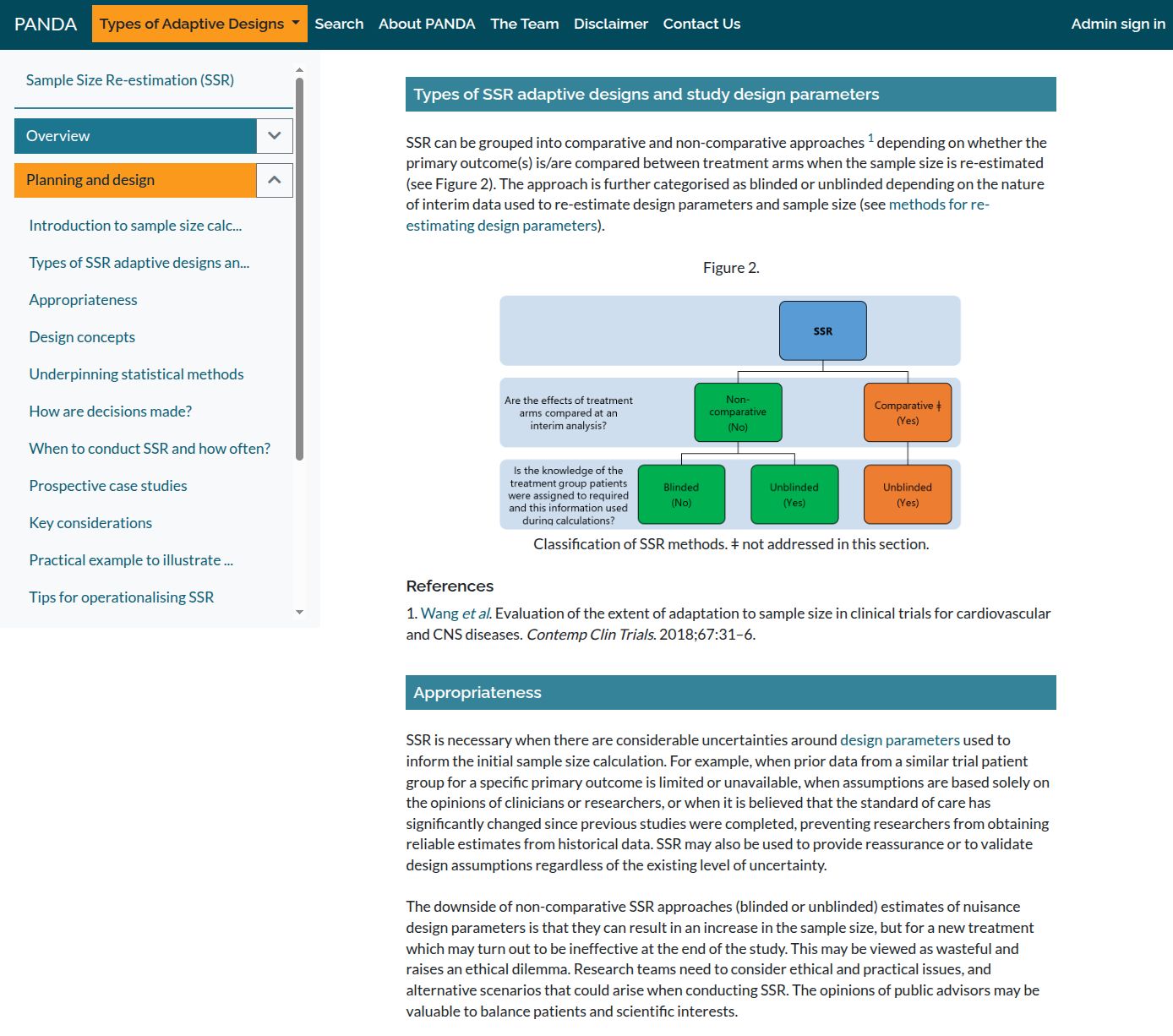
A Practical Adaptive & Novel Designs and Analysis (PANDA) toolkit - User defined content

Our custom CMS allows our end users to keep their content up to date.

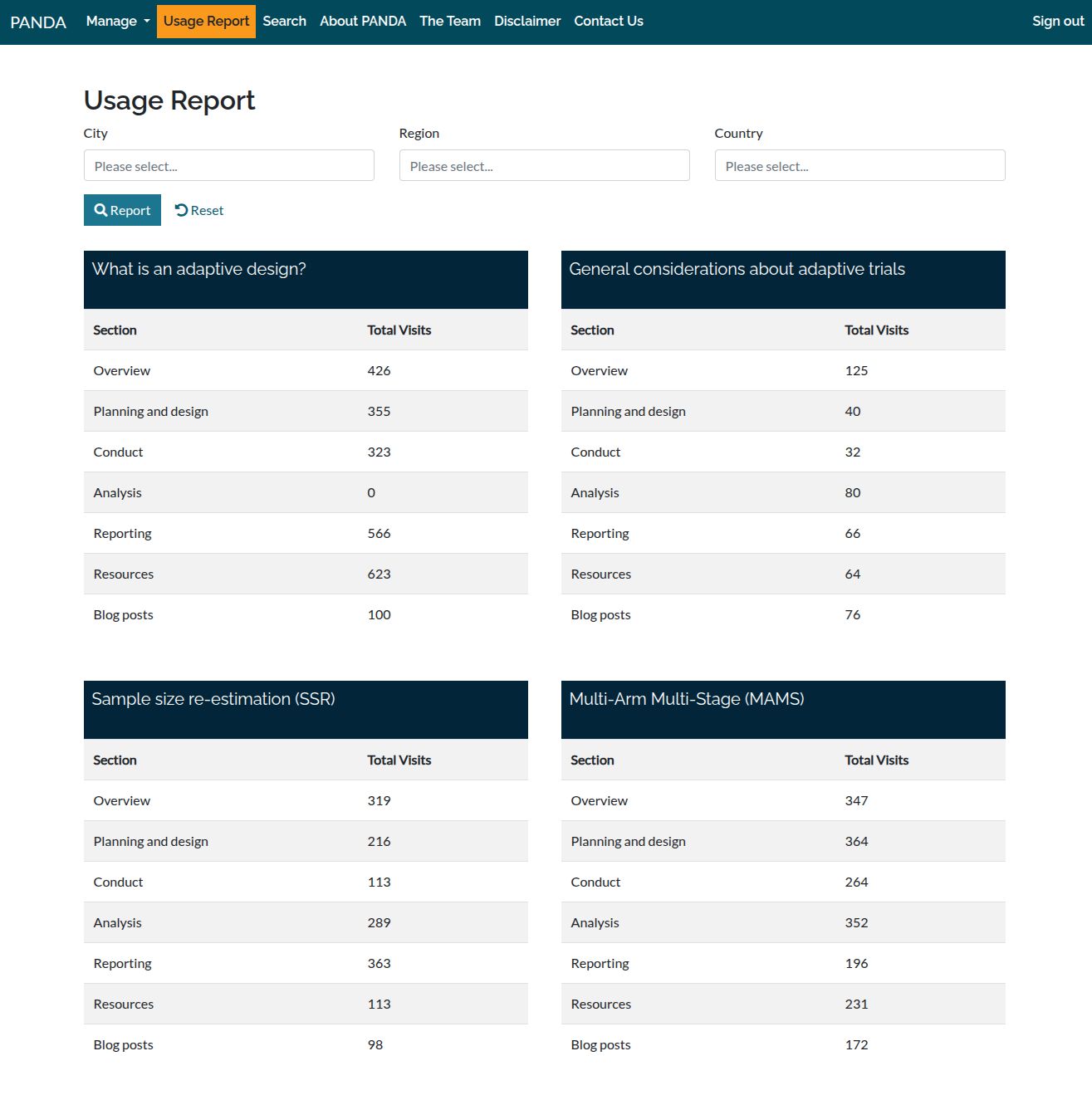
A Practical Adaptive & Novel Designs and Analysis (PANDA) toolkit - Reporting

Our in-built reporting tools allow our users to see how their content is performing

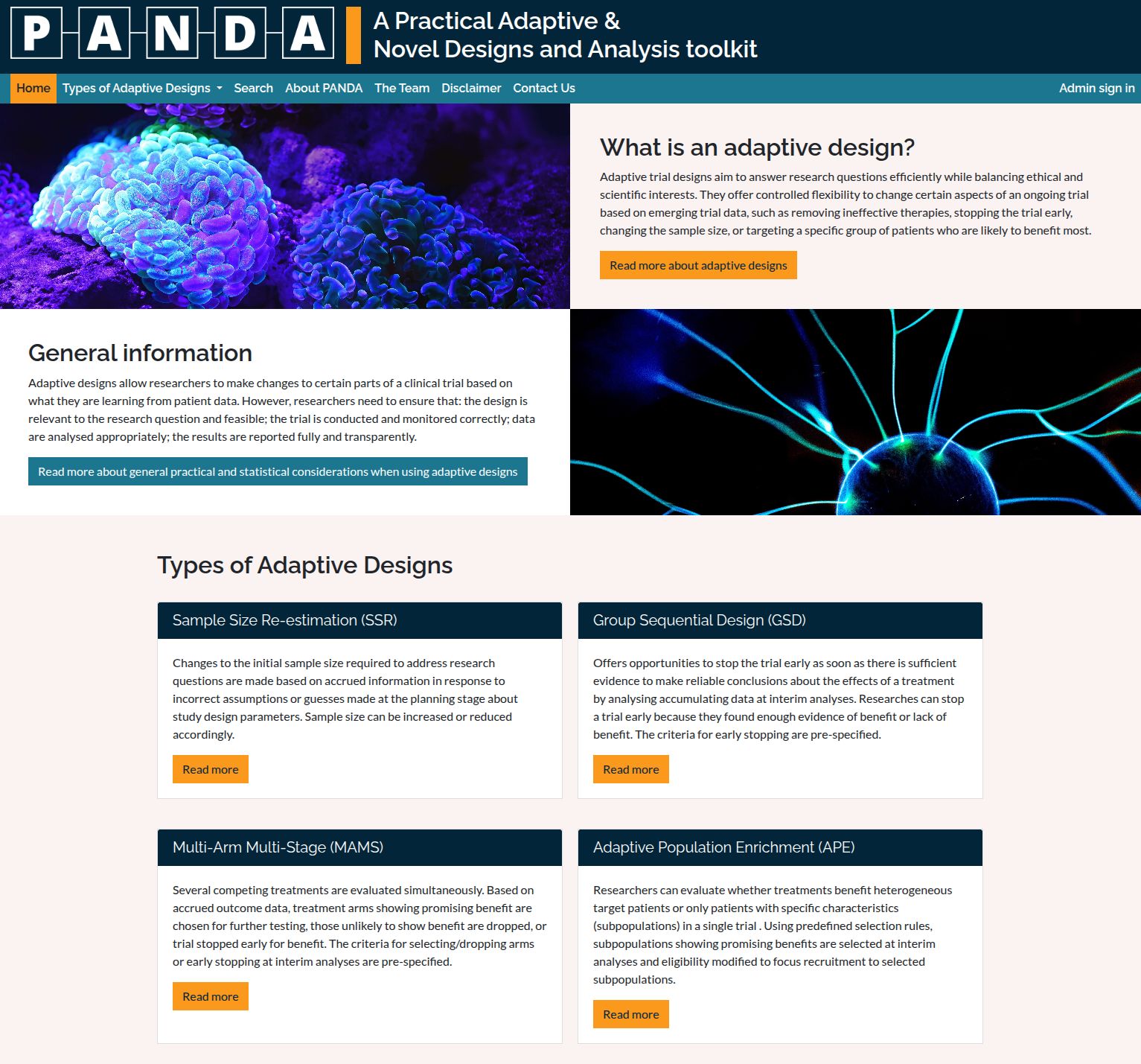
A Practical Adaptive & Novel Designs and Analysis (PANDA) toolkit - Customisable

The content of the homepage can be tailored to deliver key information in a straightforward manner

Clarity

  • Educational Content Delivery: The application is structured to deliver educational resources effectively, using a content management system (CMS) to manage articles, tutorials, and case studies.
  • Navigation: Clear multi-level menu structure that allows users to easily work through detailed and niche guidance related to adaptive designs.
  • Structured Content: Information organised into clear sections tailored to user needs.

Management

  • Content Management System (CMS): ability for the study team to update and incorporate ongoing learning and adaptation by adding new research findings and methodologies.
  • Modular Design: Providing simple maintainability and allowing easy additions of future features.
  • Database Management: A centralised database stores user data, content, and educational resources, enabling efficient retrieval and management.

Security

  • Content Management Authentication: The application implements flexible user authentication to manage access - supporting both pre-set user lists and invitation-based onboarding. This ensures that sensitive data remains protected.
  • User Account Management: User accounts include secure features such as account locking, password recovery and activation controls to maintain account integrity and prevent unauthorised access.
  • Secure Data Handling: Robust measures safeguard user data and ensure privacy.

Usability

  • Search Functionality: Robust search feature to help users quickly find relevant information and tools within the application.
  • Responsive Design: Seamless experience across desktops, tablets, and smartphones.
  • Collaborative UI and UX Development: The interface and user experience are designed to support users of varying abilities, guided by WCAG accessibility principles and aligned with the study’s branding identity.

If you would like to ask a question about PANDA toolkit or other Health Research Dissemination applications please contact us and a member of our team will be happy to help